

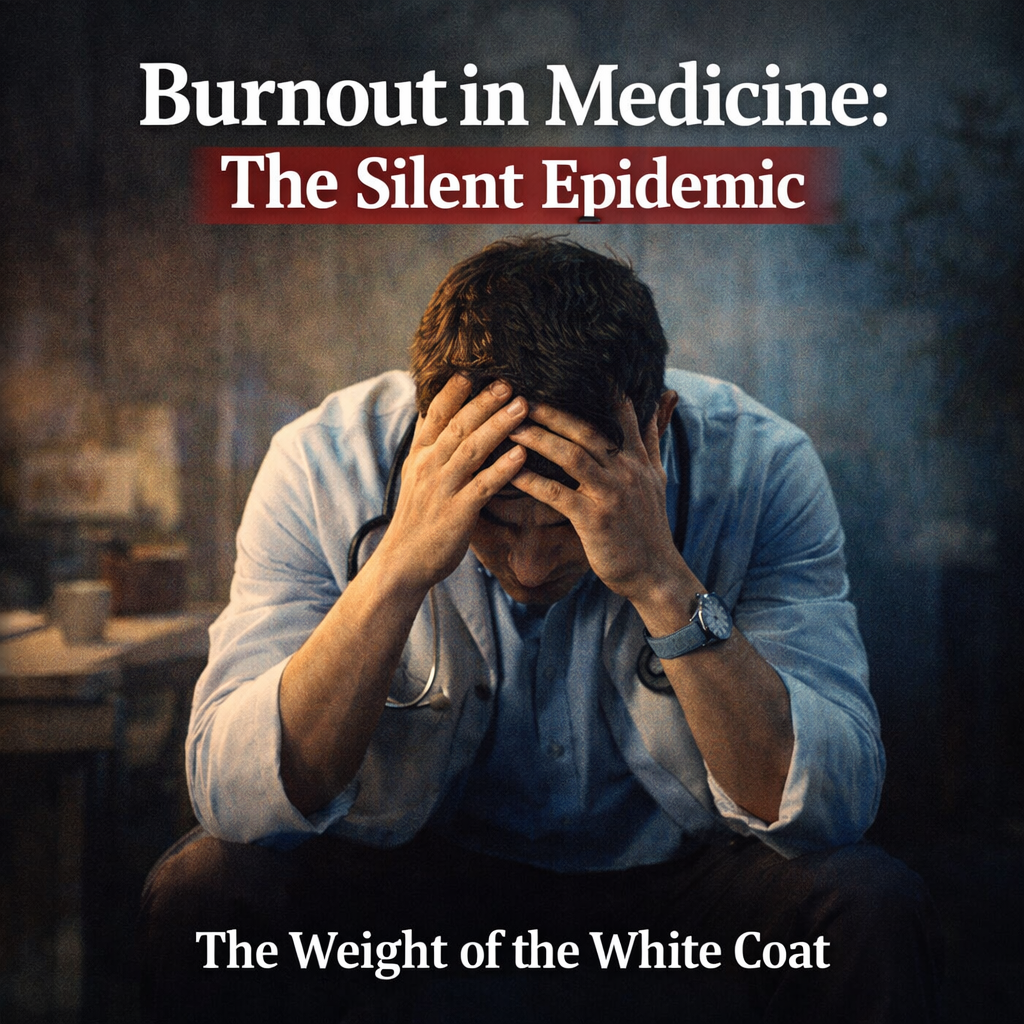
Burnout in medicine is no longer rare.
It’s becoming the norm.
Behind hospital walls and clinic doors, many doctors are silently struggling—not because they lack passion, but because they are being pushed beyond human limits.
This is the reality of doctor burnout—a growing crisis that affects not just healthcare professionals, but the entire healthcare system.
What Is Burnout in Medicine?
Burnout is often misunderstood as simple tiredness.
But in medicine, it goes deeper.
It includes:
- Emotional exhaustion
- Mental fatigue
- Loss of motivation
- Feeling disconnected from work
For doctors, burnout isn’t about not caring.
It’s often the result of caring too much for too long without enough support.
Why Doctors Burn Out
1. Long Working Hours
Doctors often work extended shifts with little time to recover.
Sleep deprivation becomes routine.
And over time, exhaustion accumulates.
2. High Patient Load
In many healthcare systems, doctors see dozens of patients daily.
Each patient deserves attention and care—but time is limited.
This creates constant pressure.
3. Emotional Burden
Doctors witness:
- Illness
- Suffering
- Loss
These experiences are not easily forgotten.
Yet there is often no time to process them.
4. Systemic Pressure
Healthcare systems often demand efficiency over well-being.
Doctors are expected to:
- Work faster
- See more patients
- Make fewer mistakes
This combination creates an unsustainable environment.
The Mental Health Impact on Doctors
Burnout doesn’t stay at work.
It follows doctors home.
It affects:
- Sleep
- Mood
- Relationships
- Overall well-being
Many doctors begin to feel:
- Emotionally drained
- Detached from their work
- Questioning their purpose
And yet, many continue working—quietly.
Why This Is a System Problem
It’s easy to assume burnout is an individual issue.
But the truth is:
Burnout in medicine is largely systemic.
It’s not about weak individuals.
It’s about strong individuals working in systems that demand more than is sustainable.
When:
- Staffing is limited
- Patient demand is high
- Rest is undervalued
Burnout becomes inevitable.
The Impact on Healthcare
Doctor burnout doesn’t just affect doctors.
It affects:
- Patient care
- Medical decisions
- Healthcare quality
An exhausted doctor is still committed—but working under strain.
And over time, that strain can affect the entire system.
Rethinking Burnout in Medicine
To address burnout, the solution cannot be:
“Work harder.”
“Be more resilient.”
Instead, the focus should be on:
- Better work conditions
- Reasonable hours
- Emotional support systems
- A culture that values well-being
Because supporting doctors is not optional.
It’s essential.
The Human Side of Burnout
Behind every statistic is a person.
A doctor who once entered medicine with purpose.
A doctor who still cares deeply.
A doctor who is simply tired of carrying too much for too long.
Burnout in medicine is not a sign of weakness.
It is a signal.
A signal that something in the system needs to change.
Because when doctors are supported…
They don’t just survive.
They thrive.
And when doctors thrive, patients receive better care.
If this resonated with you, share it with someone who needs to understand the reality of doctor burnout.
Leave a Reply