

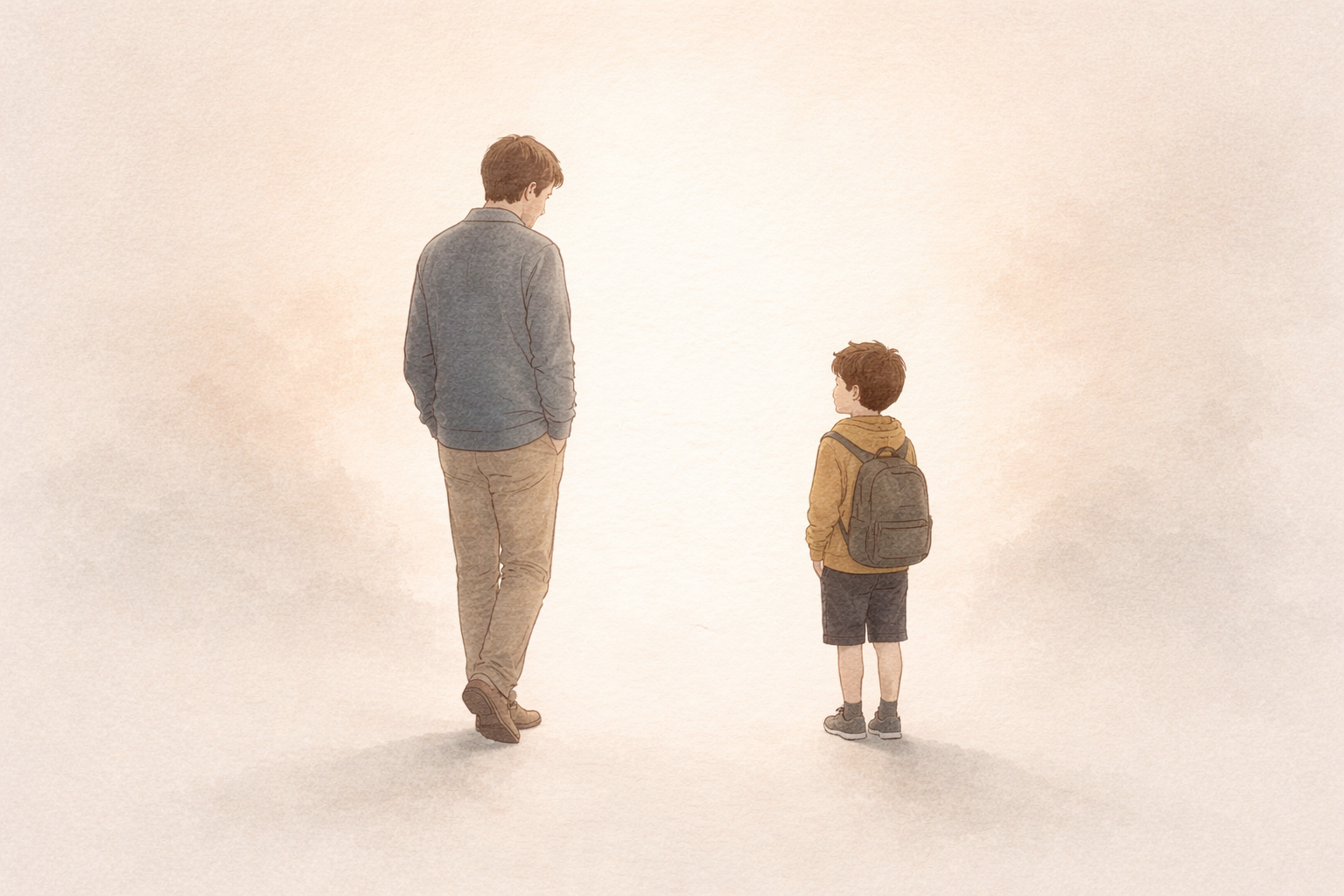
We grow up wanting to make our parents proud
As children, most of us carry a quiet, persistent desire—to make our parents feel proud of us. Not just proud in private, but proud enough to say, “That’s my child,” with a sense of certainty and joy.
Each of us is different—in our talents, sensitivities, abilities, and dreams. Yet beneath those differences lies a shared longing: the need to feel enough in the eyes of the people who raised us. Over time, that longing often becomes tangled with achievement, comparison, and the belief that being better than others is the only way to earn approval.
But do parents truly need their children to be better than everyone else to feel proud?
Maybe.
Maybe not.
Maybe they don’t need us to be the best at all. Maybe, in their hearts, we already are.
When growth feels like pressure
For parents, there is only their child. The rest of the world fades into the background. And yet, parents still push their children to do better—not better than others, but better than who they currently are.
Perfection does not exist, and growth is always possible. Even for those who are already doing well.
Two truths often exist side by side:
- A child is already the best for their parents simply because they are their child.
- Parents still want their child to grow so that potential is not wasted and regret does not follow.
The difficulty begins when the second truth is spoken repeatedly, while the first is left unspoken.
When “do better” starts to sound like “you are not enough”
Without reassurance, encouragement begins to feel like criticism. Children may start believing that no amount of effort or achievement will ever be enough.
This belief rarely comes from cruelty. More often, it comes from silence—from appreciation tied to results rather than effort, and love that feels conditional even when it isn’t intended to be.
Over time, the question shifts from “How can I grow?” to “Why am I still not enough?”
The invisible burden parents carry
Parents, too, want to be enough.
In fact, many want to be perfect. There is no comforting thought of “I’ll get better with time.” Each decision feels permanent. Each mistake feels dangerous.
Parents do not compare themselves to other parents. They compare themselves to an impossible ideal—one where every response is right and every choice protects their child completely.
By that standard, no parent can ever succeed.
Is it fair to parents?
It isn’t fair to resent parents for not meeting impossible standards. They were human, shaped by their own fears, wounds, and limitations.
But reflection is not resentment.
To observe our parents’ parenting and decide consciously what we want to carry forward—and what we want to change—is a sign of emotional intelligence. It is growth, not rejection.
Each generation that chooses awareness over denial moves society forward, even if perfection remains out of reach.
Perhaps this is the truth
Children are already enough for their parents.
Parents were already enough in the ways they knew how to be.
And yet, both continue striving to become better—not because they failed, but because being human means living between love and limitation.
And perhaps that uncomfortable space is where real growth begins.
Leave a Reply