

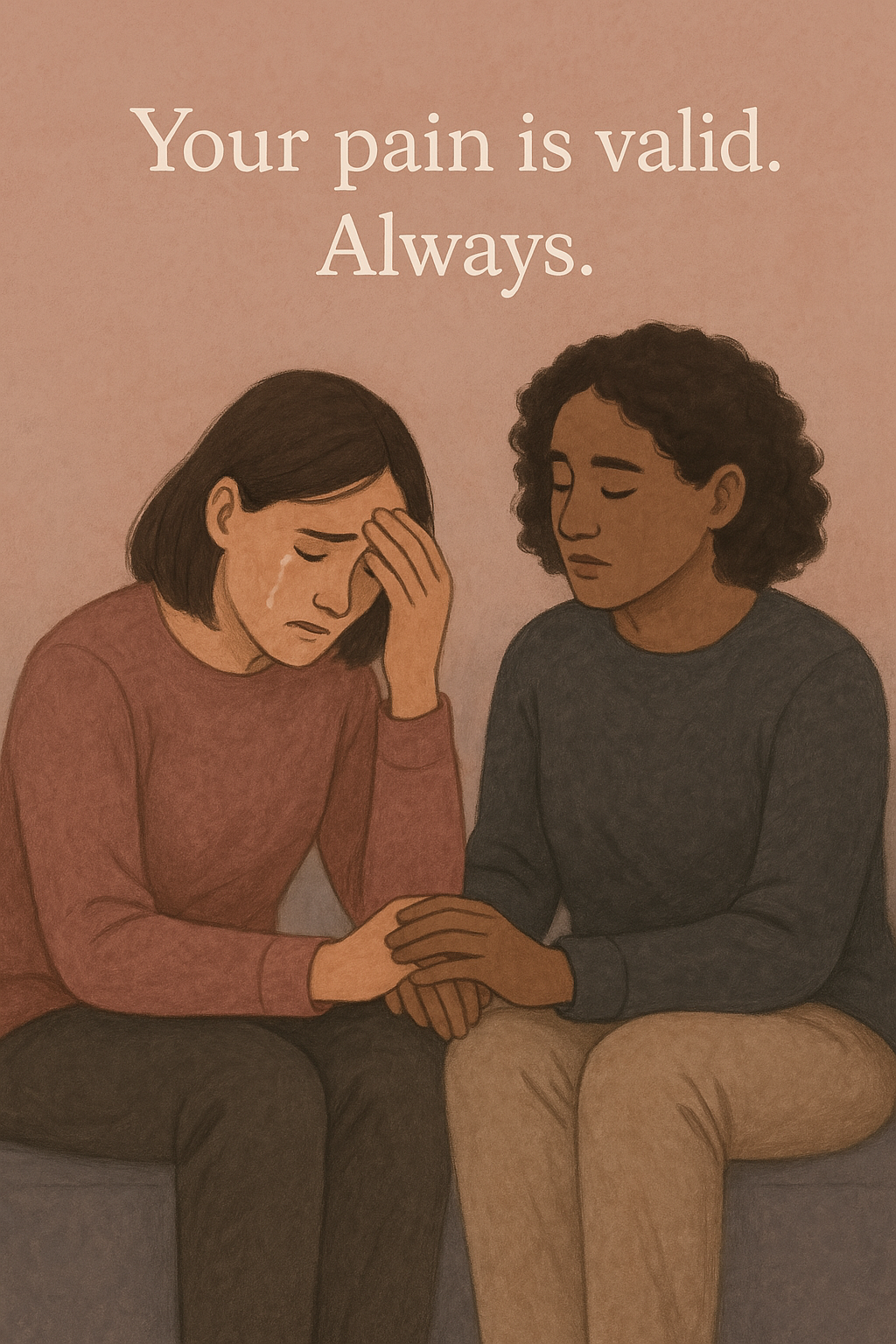
One of the most harmful myths in our culture is the belief that only the most severe trauma deserves recognition. Many people assume that telling someone, “Others have it worse than you,” will help them gain perspective and overcome their struggles.
In reality, most people who are suffering already know that others may be facing greater challenges. Pointing this out rarely eases their pain. Instead, it often leaves them feeling guilty, ashamed, or frustrated for struggling at all.
The truth is simple: trauma is not a competition.
Healing is not reserved for those who have experienced the greatest hardships. Every person’s emotional experience is unique, and similar events can affect different individuals in very different ways.
I recently came across a quote on Instagram that perfectly captures this idea:
“Someone who drowns in 7 feet of water is just as deceased as someone who drowns in 20.”
This powerful reminder encourages us to stop comparing trauma and start focusing on recovery, empathy, and support—for ourselves and for others.
The Hidden Harm of Comparison
When someone says, “Others have it worse,” the message often received is:
“Your pain doesn’t matter.”
Even when well-intentioned, this mindset can have damaging consequences. It can:
-
Prevent people from seeking help.
-
Increase feelings of guilt, shame, or embarrassment.
-
Delay emotional healing and mental wellness.
-
Minimize experiences that deserve attention and support.
Pain does not become less real simply because someone else is suffering too.
Why Every Experience Matters
No two people respond to life events in exactly the same way.
A breakup, the loss of a loved one, unemployment, bullying, chronic stress, or a difficult childhood can all leave lasting emotional wounds. Our personal histories, coping mechanisms, support systems, and life experiences influence how we process and respond to challenges.
Yet many people dismiss their own feelings with thoughts such as:
-
“It wasn’t that big of a deal.”
-
“I should be over this by now.”
-
“Other people have gone through much worse.”
Unfortunately, self-invalidating thoughts rarely reduce pain. More often, they deepen it.
Emotional distress does not need to meet a certain threshold to be considered valid. If something is affecting your peace, your well-being, or your ability to function, it deserves acknowledgment and care.
Every Individual’s Trauma Is Significant
Your Mind Doesn’t Compare Pain
The brain does not measure suffering by comparing your experiences to someone else’s. It responds to your emotions, perceptions, and lived experiences.
What feels overwhelming to one person may feel manageable to another—and both responses are valid.
Support Is Not a Limited Resource
Someone else’s pain does not make your struggles less important.
Compassion, support, and care are not finite resources. There is room for everyone to receive help, healing, and understanding.
Healing Begins With Self-Compassion
Recovery starts when we allow ourselves to acknowledge our pain without judgment.
Validating your emotions is not self-pity; it is an act of self-compassion. It creates the foundation upon which healing and personal growth can occur.
Creating a More Supportive Community
If we want to build a healthier and more compassionate society, we must move away from comparing struggles and start listening with empathy.
We can begin by committing to:
-
Listening without judgment.
-
Creating safe spaces for honest conversations.
-
Respecting each person’s unique experiences.
-
Reminding others that no problem is “too small” to discuss.
-
Offering support instead of comparison.
Sometimes, the most healing thing we can do is simply let someone feel heard.
Seeking Help Is a Sign of Strength
Therapy is not reserved for people in crisis. It is a valuable resource for anyone seeking greater self-awareness, emotional healing, personal growth, or mental wellness.
If you’ve been telling yourself, “My problems aren’t serious enough for therapy,” consider this your reminder:
You do not need to be falling apart to deserve support.
You deserve peace, healing, and care regardless of how your experiences compare to anyone else’s.
Let’s Stop Ranking Trauma
You do not need to prove your suffering to earn compassion.
You do not need to compare your pain to justify seeking help.
If it hurts, it matters.
Let’s stop ranking trauma and start validating experiences. Let’s replace comparison with empathy, judgment with understanding, and silence with support.
Because every person’s pain deserves to be heard—and every person deserves the opportunity to heal.
Feel and Heal Book Series – 3-Book Bundle


Leave a Reply